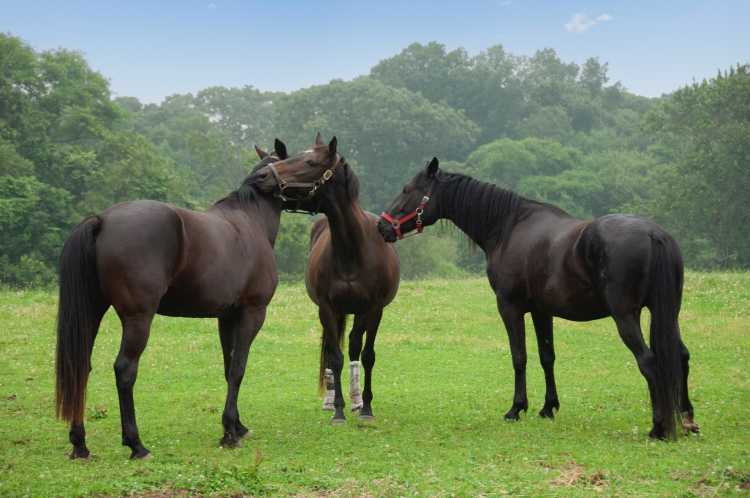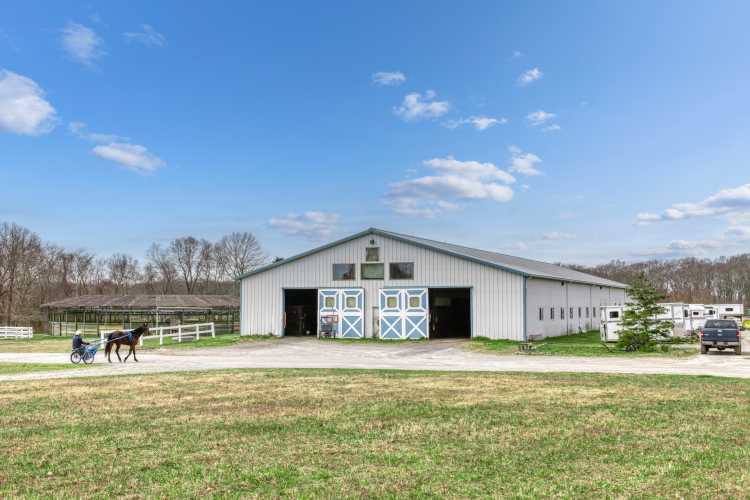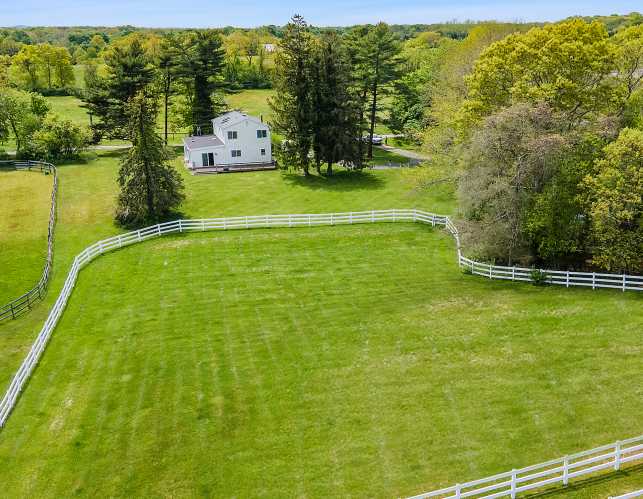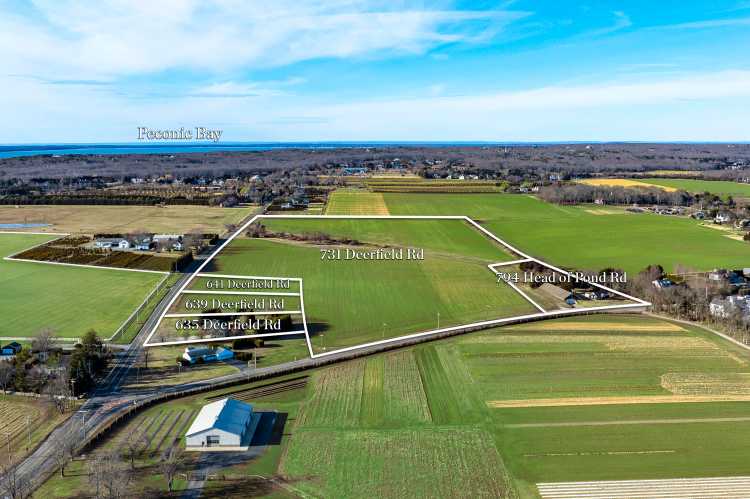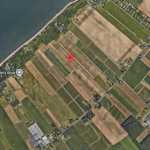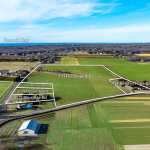
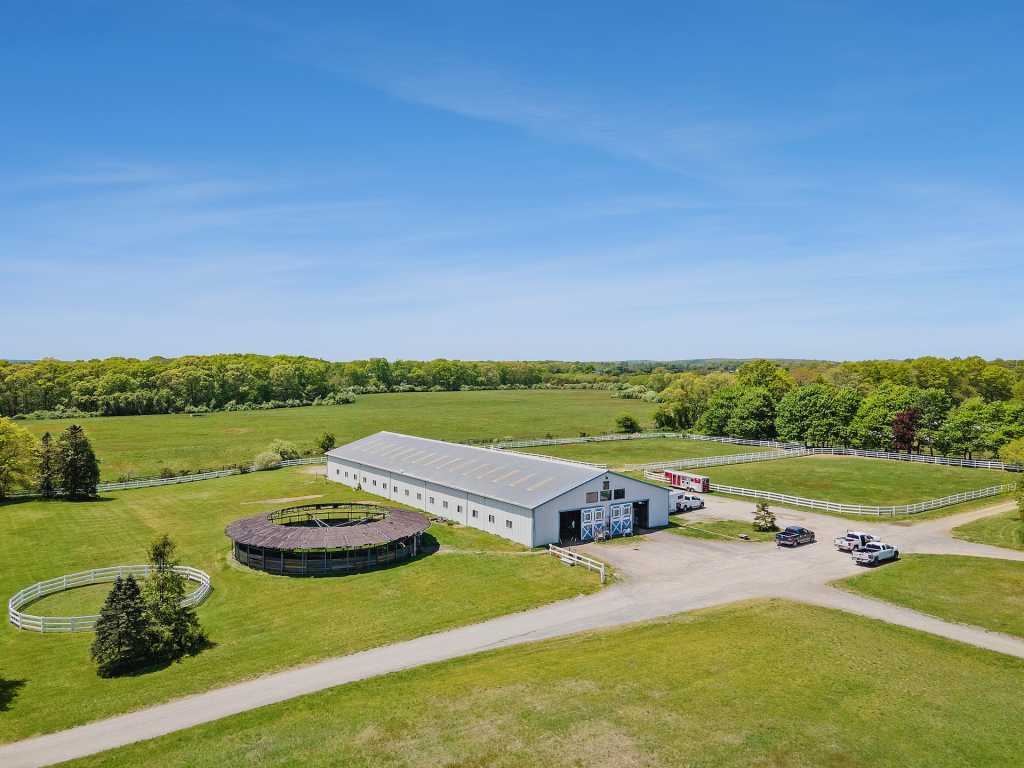
A 163-acre North Fork farm in Jamesport has been split into three parcels and sold, including a $3.5 million deal for a 108-acre equestrian facility now operating as Thunder Road Stables.
Formerly known as B.J. Farms, the property recently changed hands in separate transactions. Debra Rothwell and her husband, Riverhead Town Councilman Kenneth Rothwell, acquired the largest portion, approximately 108 acres at 1394 Main Road, continuing its long-standing equestrian use.
A separate 22-acre parcel at 1408 Main Road was purchased for $2.4 million by Patty Gentry, who plans to relocate her organic farm from Brookhaven to the site. Meanwhile a third parcel at 1386 Main Road, totaling approximately 32 acres, with development rights still in tact, is currently under contract. It was last asking $2.999 million.
“It was the largest operating equestrian property on the North Fork of Long Island,” said listing agent Joseph DiVello of Century 21 Albertson Realty. “We had it listed as a whole, but ultimately broke it into pieces to get more traction and get it sold.”
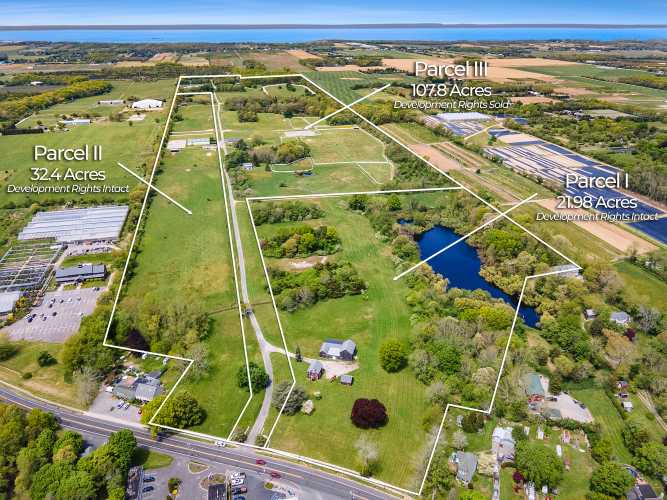
The property has a long agricultural history on the North Fork. Once a working potato farm, it was transformed in the 1970s into a thoroughbred horse facility by Robert Entenmann, of the bakery business fame. It became known as Big E Farm. Development rights to what is now owned by the Rothwells were sold in 1979, permanently preserving the land for agricultural use. Since then, it has remained an active equestrian facility through multiple owners, most recently Brian and Jennifer Nixon.
DiVello said the shift to multiple parcels opened the property to different types of buyers, each with a specific use in mind, from equestrian operations to small-scale agriculture.
For Gentry, founder of the two-acre Early Girl Farm in Brookhaven, the purchase represents a shift from leasing land to owning it after years of building soil on properties she did not control.
“It’s a small, no-till organic farm,” she said. “We’ve been leasing, and it takes a lot of effort to bring a property back to life. So to now own the land and be able to do that work long-term is just amazing.”
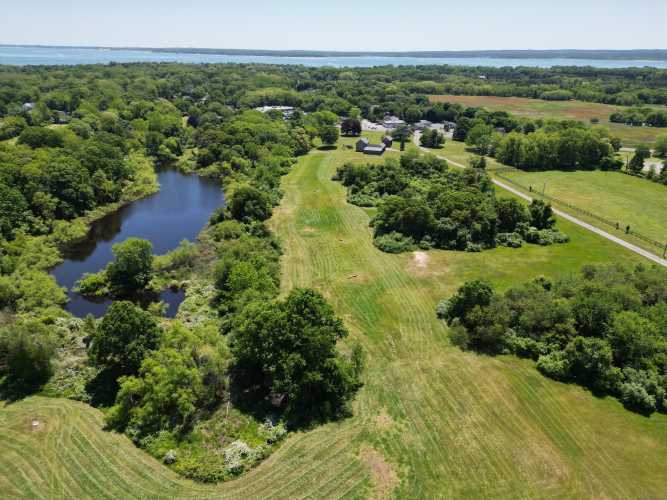
Gentry, who runs the farm with her brother, said the property stood out immediately.
“My brother and I stepped foot on that property, and he looked over at me and said, ‘Oh my God,’” she said. “It’s so physically beautiful. There’s a two-acre pond on the property, which is outrageous. The land itself just felt magical.”
Her operation, which currently supplies about 20 restaurants and serves a 150-member community-supported agriculture program, will expand gradually as the land is prepared for long-term use.
“Our first goal is just to get the soil in good condition so we can plant,” she said. “There’s no rushing nature. We think it’s going to take about two years to be fully operational.”
The largest parcel, now Thunder Road Stables, includes a four-bedroom, two-bathroom home, as well as the equestrian facilities. There are nearly 90 stalls, multiple outdoor riding arenas, an indoor arena currently under lease and a half-mile training track, along with expansive pastureland stretching across the Main Road corridor, with a mix of open pasture and wooded sections.
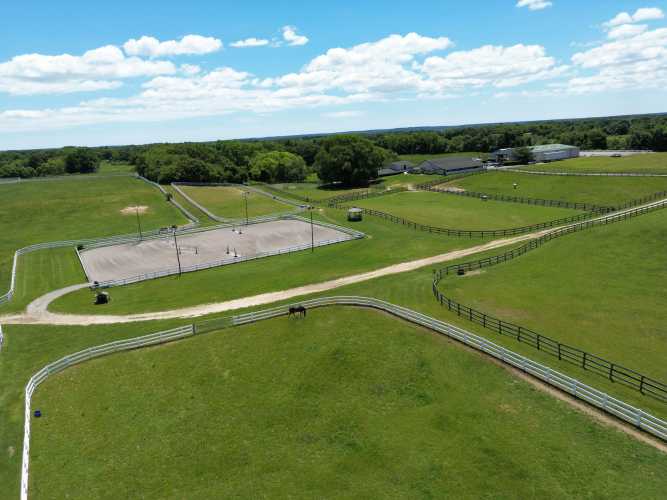
Rothwell had been boarding her own horses at the facility for several years prior to the purchase and stepped into an operation that was already active, with horses and staff in place.
“Within 10 minutes of my horses settling in, I knew this was meant to be,” she said. “It became a place of serenity for me, and when I saw other people starting to look at it, I got nervous it was going to be taken away.”
Large, contiguous properties of this scale have become increasingly rare on the East End, particularly those preserved for agricultural use.
“It’s definitely rare to have a tract of land this big in the area,” said DiVello. “I mean, the island’s only four or five miles wide… so to find a tract of land that size is definitely unique.”
With development rights already in place, the land is permanently restricted from residential construction, preserving its agricultural use across all parcels.
“It protects its future,” Rothwell said. “Nobody has to worry about housing developments or anything non-agricultural going in there.”
Email tvecsey@danspapers.com with comments, questions, or tips. Follow Behind The Hedges on Facebook, X and Instagram.